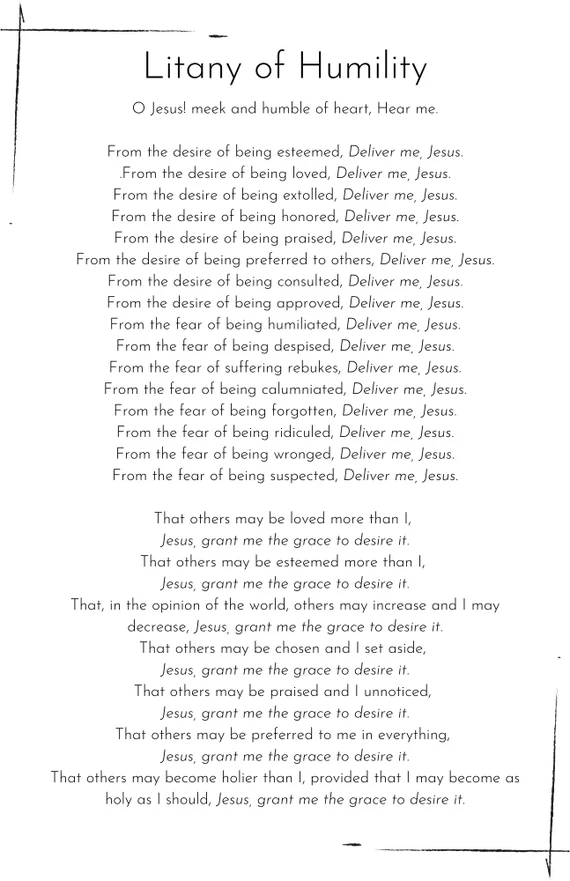
So much has been written recently about the modern day problem of polarization between people with different political and theological opinions. In our opening presentation on the Faith and Science Perspective of St. John Paul II, the presenter presented the perspective of John Paul II as he worked towards the conversion of hearts in a society directing itself towards Marxism/Communism. Saint John Paul the Great (as archbishop of Krakow) looked upon these differences of opinions not as problems to be solved, but as the NEEDS of people to be taken seriously. So he knew that Marxism was a dead end, but it was critical to listen to the needs of the people they were trying to address with Marxism because those needs can be heard and directed along a path that might better lead to the truth. This path to the truth can lead to dialogue and ultimately evangelization. But there is a natural tendency, I think, driven by the ego to condemn perspectives that don’t align with our own. And condemnation puts and end to dialogue. Perhaps every single person before they engage in discussions and idea exchanges should pray the Litany Of Humility
When it comes to faith and science, we have people who are “scientific materialists” who reduce all of reality to the sum of its parts. As Carl Sagan once said “I am nothing but a collection of atoms bearing the name Carl Sagan”, yet the great flaw of methodological reductionism is the “immeasurability of the human spirit that has an immensity and dignity that cannot be reduced to a material/biological level” (John Paul II)
On the flip side is a “Creationist or Intelligent Design argument” that suggests that science is a quest for knowledge for the sake of power, and actively condemns scientific findings that counter its religious perspectives.
Neither approach described above is the appropriate Catholic approach to Science and Faith. Rather the Church and its leadership must be aware of and engaged in the scientific truths as they are uncovered and allow through dialogue the refinement of our understanding of faith in the context of science. Science and faith are both gifts from GOD…they were never intended to be on a collision course.
John Paul II emphasizes dialogue and the truth that Church leadership ought to be mindful of the pastoral consequences of her teachings (the long term impact of punitive actions against Galileo) continues to impact modern day science students in their ability to accept the Church as the arbiter of truth. And many would say, the whole Galileo affair did not have to go down the way it did. Perhaps if both the Church leadership of the time and Galileo had immersed themselves in humility, a different outcome might have resulted.
I think my key takeaways are:
- Humility! Humility! Humility! and more Humility!
- Dialogue (WITHOUT CONDEMNATION) is essential!
from a Letter from JP 2 to Fr. Coyne
By encouraging openness between the Church and the scientific communities, we are not envisioning a disciplinary unity between theology and science like that which exists within a given scientific field or within theology proper. As dialogue and common searching continue, there will be grow towards mutual understanding and a gradual uncovering of common concerns which will provide the basis for further research and discussion. Exactly what form that will take must be left to the future. What is important, as we have already stressed, is that the dialogue should continue and grow in depth and scope. In the process we must overcome every regressive tendency to a unilateral reductionism, to fear, and to self-imposed isolation. What is critically important is that each discipline should continue to enrich, nourish and challenge the other to be more fully what it can be and to contribute to our vision of who we are and who we are becoming.
We might ask whether or not we are ready for this crucial endeavour. Is the community of world religions, including the Church, ready to enter into a more thorough-going dialogue with the scientific community, a dialogue in which the integrity of both religion and science is supported and the advance of each is fostered? Is the scientific community now prepared to open itself to Christianity, and indeed to all the great world religions, working with us all to build a culture that is more humane and in that way more divine? Do we dare to risk the honesty and the courage that this task demands? We must ask ourselves whether both science and religion will contribute to the integration of human culture or to its fragmentation. It is a single choice and it confronts us all.
For a simple neutrality is no longer acceptable. If they are to grow and mature, peoples cannot continue to live in separate compartments, pursuing totally divergent interests from which they evaluate and judge their world. A divided community fosters a fragmented vision of the world; a community of interchange encourages its members to expand their partial perspectives and form a new unified vision.
Yet the unity that we seek, as we have already stressed, is not identity. The Church does not propose that science should become religion or religion science. On the contrary, unity always presupposes the diversity and the integrity of its elements. Each of these members should become not less itself but more itself in a dynamic interchange, for a unity in which one of the elements is reduced to the other is destructive, false in its promises of harmony, and ruinous of the integrity of its components. We are asked to become one. We are not asked to become each other.
To be more specific, both religion and science must preserve their autonomy and their distinctiveness. Religion is not founded on science nor is science an extension of religion. Each should possess its own principles, its pattern of procedures, its diversities of interpretation and its own conclusions.
 Catholic science teacher blog
Leave a comment